🧼 Mold on Clothes? Here’s What to Do (Before It Spreads)
In the Northeast — especially in older homes in Massachusetts and Rhode Island — moisture is a silent enemy. Whether from coastal humidity, poorly ventilated basements, or clothes left damp in the hamper, mold and mildew can appear quickly. These fungi not only leave dark stains and strong odors but may also trigger allergies and damage fabrics permanently if not treated promptly.
In this guide, we explain why mold appears, how to get rid of it using natural methods, and when to call in professional support.
🌫️ Why Mold and Mildew Appear on Clothing
Mold spores are always around us, but they thrive in humid, stagnant environments. Common causes include:
- Leaving wet laundry in the washer overnight
- Storing damp clothes in closets or suitcases
- Poor ventilation in bedrooms, bathrooms, or laundry rooms
- High indoor humidity (above 60%), especially in fall and winter
Older New England homes, often with less insulation and more porous materials, are particularly susceptible.
According to the EPA, maintaining indoor humidity below 60% and drying clothing promptly are key to preventing mold growth source.
⚠️ Health Risks of Mold on Fabrics
- Respiratory irritation
- Skin allergies
- Asthma flare-ups
- Musty odors that linger even after washing
Mold spores can also transfer to other garments or surfaces if left unchecked.
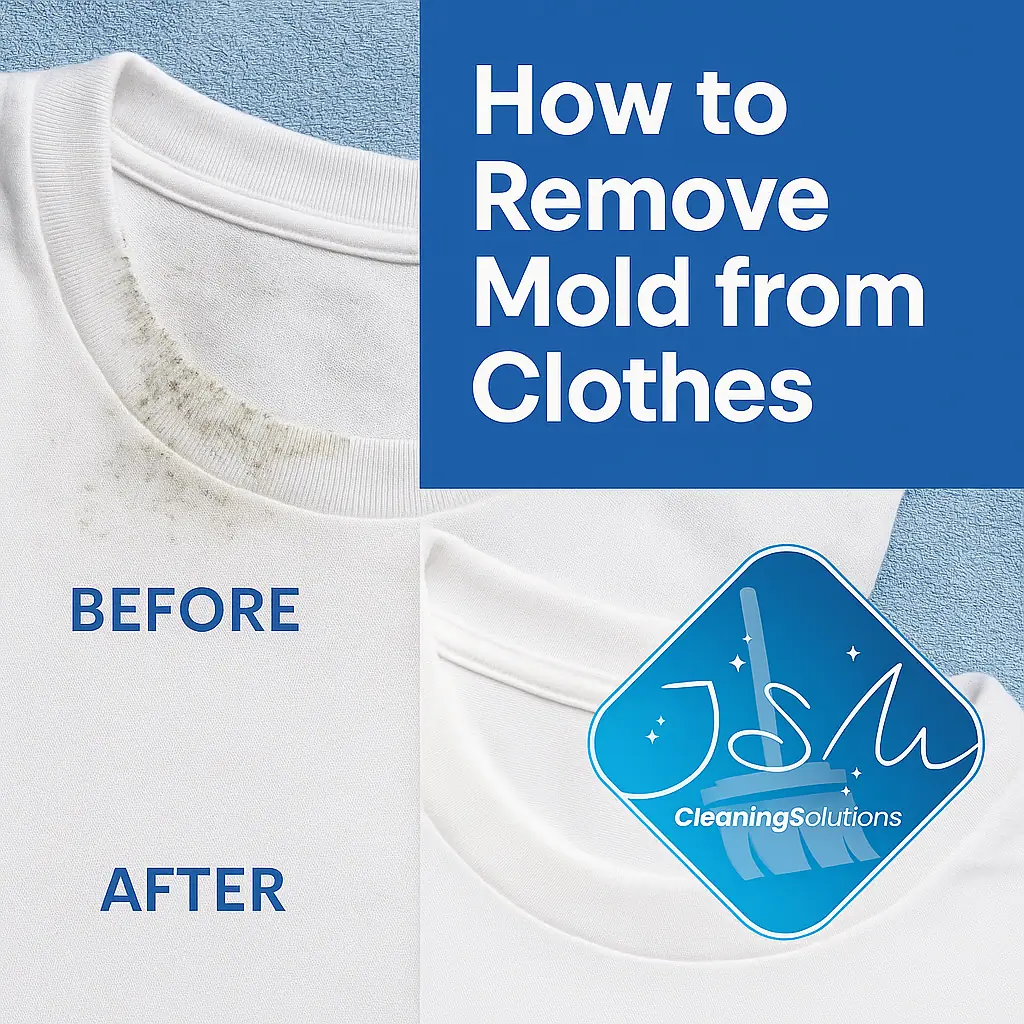
🧴 How to Remove Mold from Clothes — Safely
✅ 1. Inspect and Isolate
Move affected garments outside or into a ventilated laundry area. Mold can spread invisibly to nearby fabrics.
🧂 2. Natural Pre-Treatment Options
Option A: White Vinegar
- Soak the item in hot water + 1 cup of vinegar for 1 hour
- Scrub affected areas with a soft brush
- Wash normally
Option B: Baking Soda
- Sprinkle on visible mold
- Add 1 cup of baking soda to the washer along with your regular detergent
Option C: Lemon Juice + Sunlight
- Apply lemon juice directly to the stains
- Hang outside in full sun for a few hours
Lemon acts as a natural bleach and sunlight helps kill spores.
📌 Note: Test any solution on a hidden area first to avoid fading.
👚 Best Practices for Washing
- Use the hottest water the fabric allows
- Add oxygen-based bleach for whites or color-safe loads
- Always dry in direct sunlight if possible
For deeper infestations, you can try specialized detergents like OxiClean™ or borax-based treatments source.
🧼 Can Mold-Damaged Clothes Be Saved?
Yes — if treated early. But if fabric is already weakened or the odor persists, a professional cleaning service may be your best option.
At JSM Cleaning Solutions, we offer eco-safe mold and mildew remediation for clothing, upholstery, and indoor surfaces. If you have a recurring issue or live in a humid property, professional treatment could save you time, health, and money.
🧯 How to Prevent Mold on Clothing in New England Homes
- Keep indoor humidity between 40–60% (use a hygrometer)
- Use dehumidifiers in closets, basements, and bathrooms
- Leave closets slightly open to allow airflow
- Avoid pressing furniture (like wardrobes) directly against external walls
- Never store damp or unwashed clothing
- Rotate off-season clothes and use vacuum-sealed bags with desiccants
Read more on moisture control at Mass.gov Housing Resources.
☀️ Mold-Free, Fresh-Smelling Clothes Start with Better Habits
A musty smell or spot doesn’t mean the end of your favorite hoodie or bedsheets. With the right products, sunlight, and a bit of elbow grease, you can rescue most garments — and prevent future outbreaks.
Need professional help with stubborn stains or indoor mold?
Contact JSM Cleaning Solutions for safe and effective service in Massachusetts and Rhode Island.
👉 Request your free quote now →